Custom Code

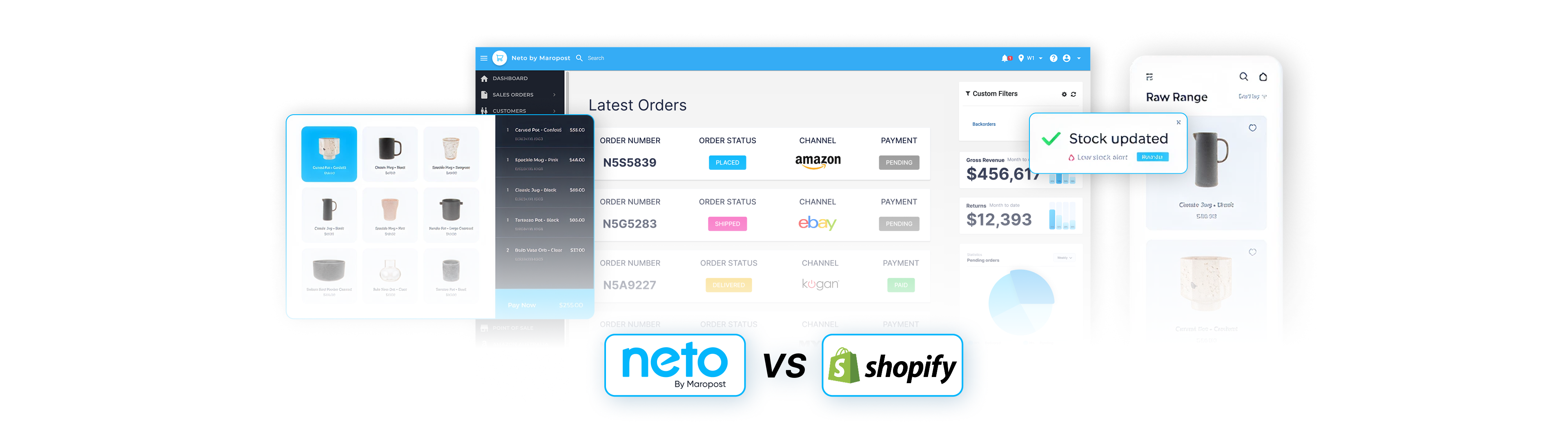
Neto vs Shopify: power your growth with the platform that simplifies operational complexity

Outgrowing Shopify? See how Neto goes further to support more scalable inventory management, fulfilment, B2B,and multi-channel operations for growing ecommerce
and retail businesses.
Evaluating BigCommerce as well? See Neto vs BigCommerce
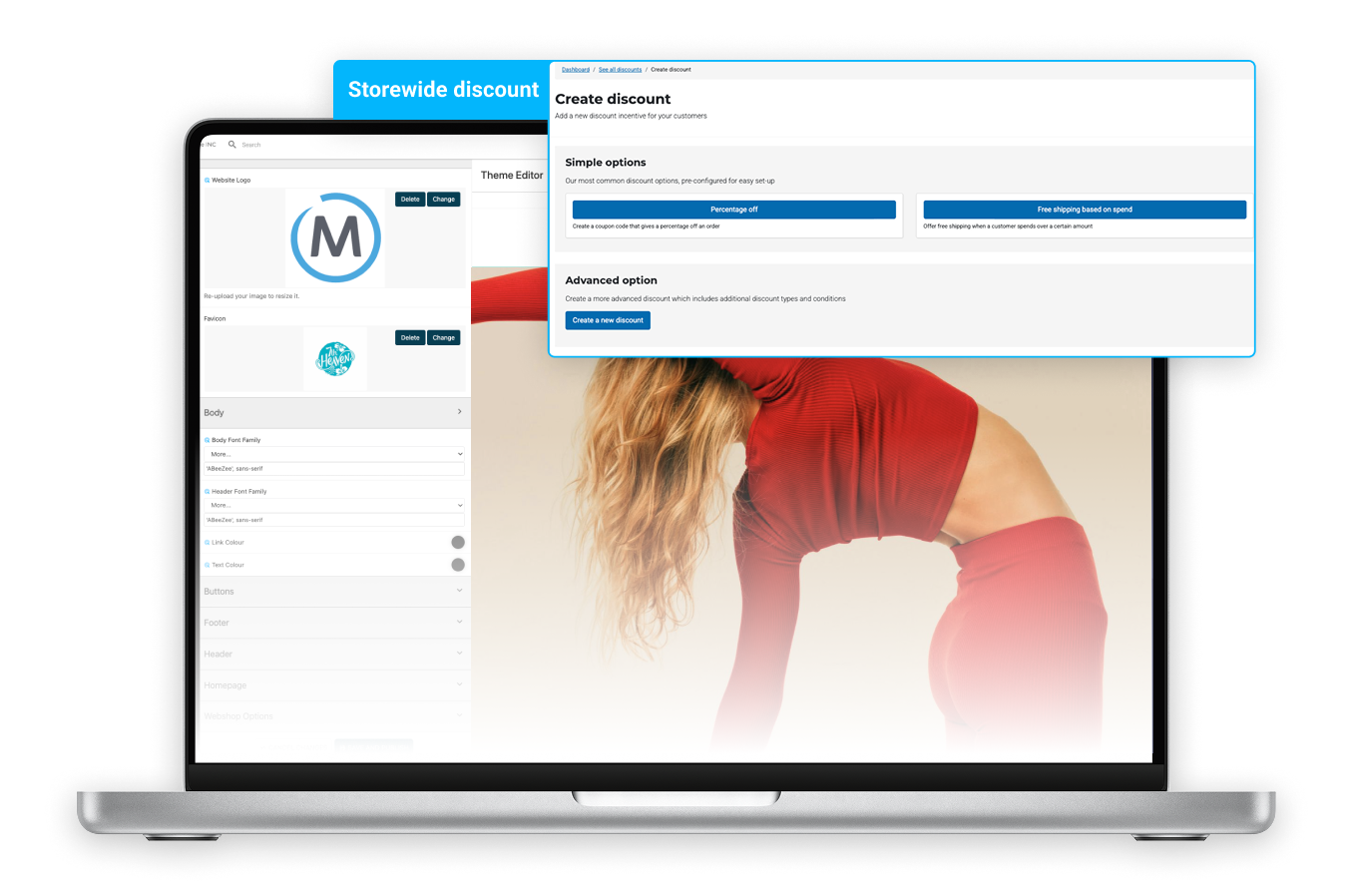
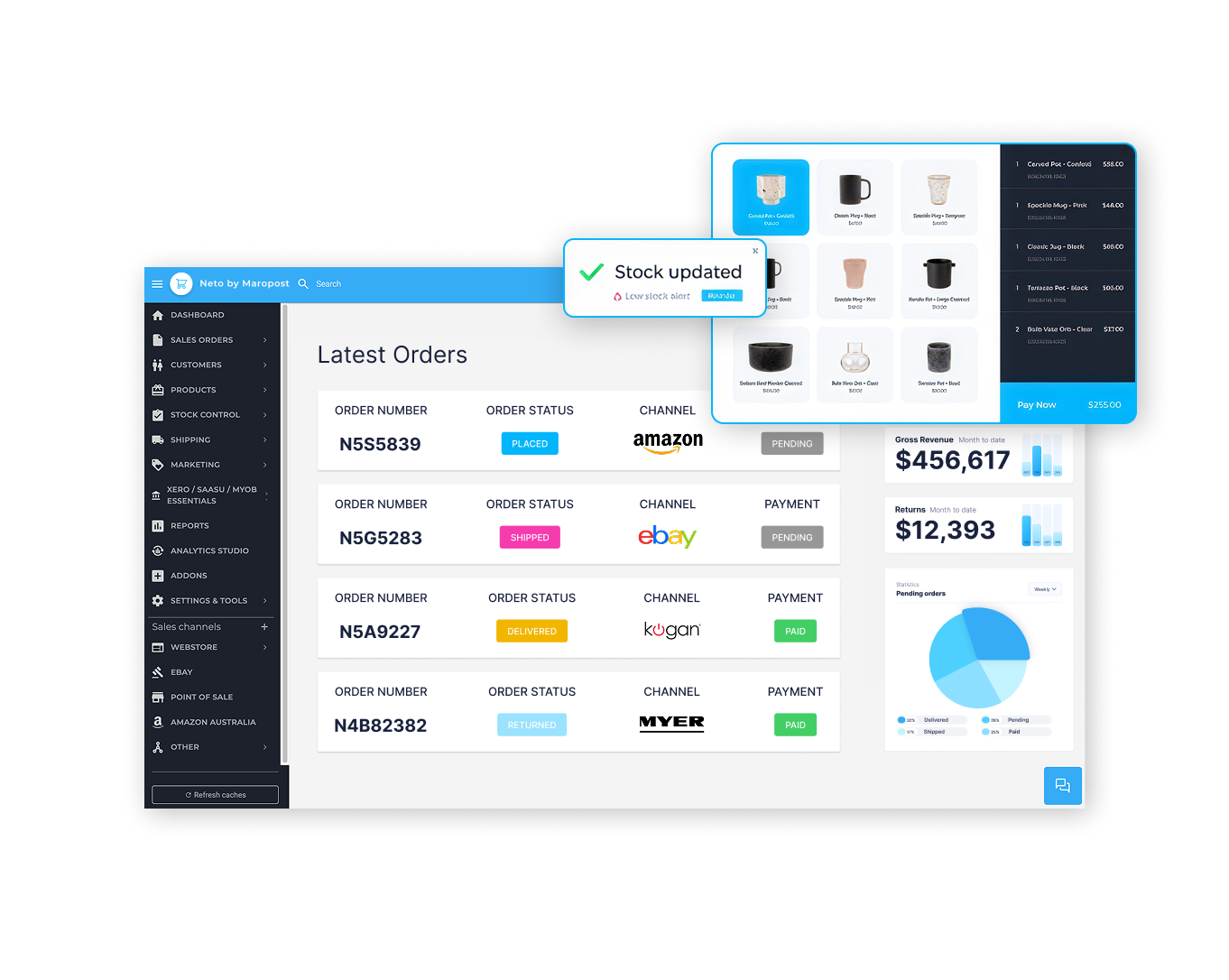
Neto Dashboard Interface showing Inventory Management and Unified Operations

Neto vs Shopify at a glance

Built-in Capability Neto Shopify
Storefront creation and customisation Included Included
POS integration Included
Partial Support

Plan dependent

Single source of truth for inventory Included
Partial Support

App-dependent

Multi-location inventory management Included
Partial Support

Plan + app dependent

Purchase order management Included
Partial Support

Third-party tools

Order routing logic Included
Partial Support

App-dependent

Landed cost tracking Included
Partial Support

Third-party tools

Shipping & label creation Included
Partial Support

App-dependent

Demand forecasting Included
Partial Support

Third-party tools

Warehouse workflows Included
Partial Support

WMS integrations

B2B portals Included
Partial Support

Plan + app dependent

Customer-specific pricing Included
Partial Support

App-dependent

Marketplace integrations Included
Partial Support

Connector based

Custom integrations/ APIs Included Included

How Neto compares to Shopify and why it’s a smarter choice for operations-led businesses

Built for unified operations, not just storefront flexibility

Shopify is designed for flexibility, making it easy to launch, customise, and extend your store with themes apps, agencies, and integrations. Neto is built for unified operations, with inventory, orders, purchasing, fulfilment, B2B, marketplaces, shipping, and POS working together in one core platform.
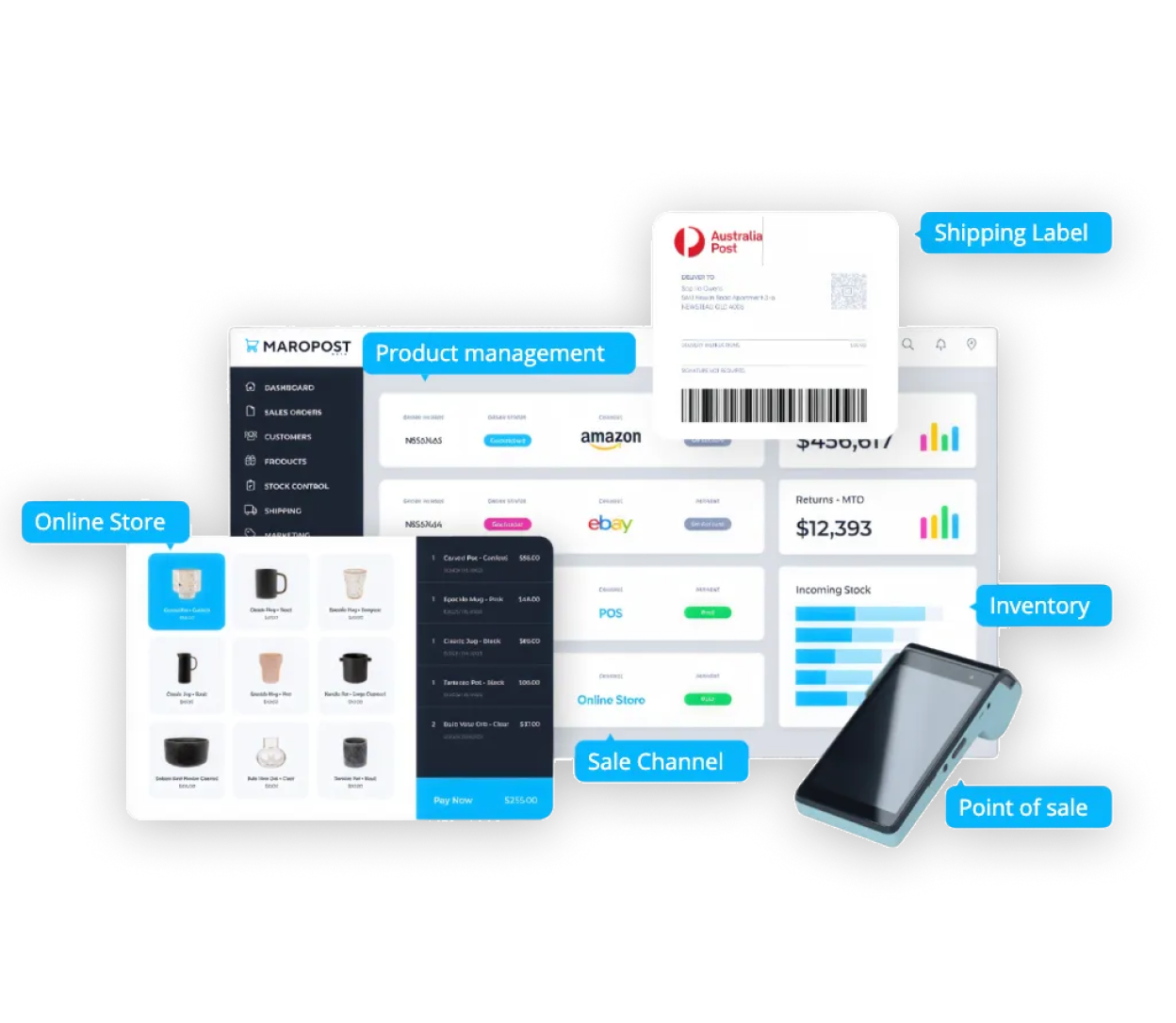
Neto Unified Operations Dashboard showing Order Management and Fulfillment

Lets you scale your ecommerce business without adding as many
extra apps

As ecommerce businesses grow, adding more apps and integrations often creates disconnected workflows and operational complexity for Shopify users. Neto makes it easier to manage inventory across multiple locations, support B2B customers, sell on marketplaces, and run more structured fulfilment workflows – without adding as many extra tools.
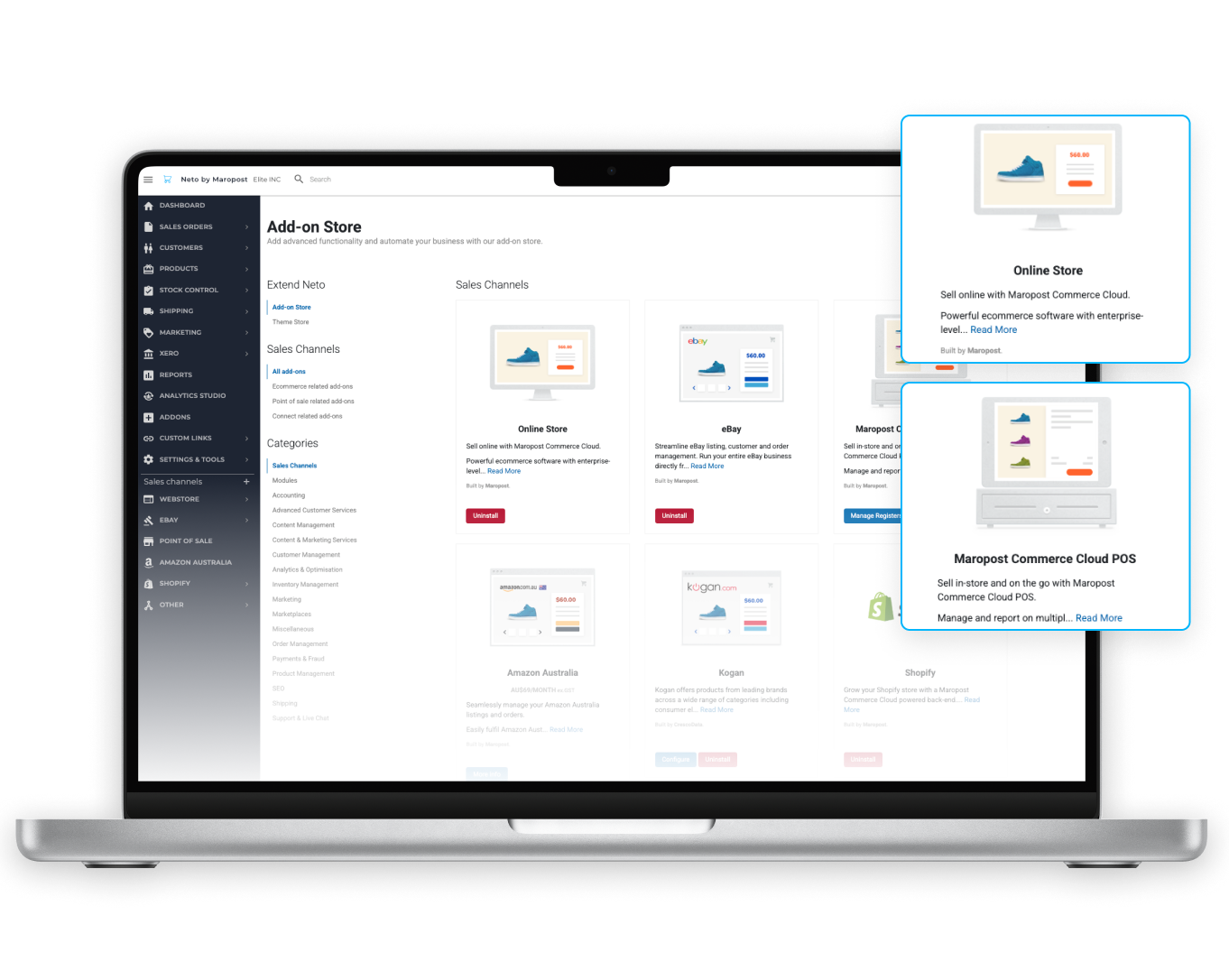
Neto Inventory Management Screen for Multi-location Stock Control

Lowers total cost of ownership
by unifying ecommerce and retail operations

Unlike Shopify, which typically relies on multiple apps to extend operational capabilities, Neto enables you to run core ecommerce and retail operations from a single platform. For operationally complex businesses, this reduces fragmentation, simplifies execution, and lowers total cost of ownership.
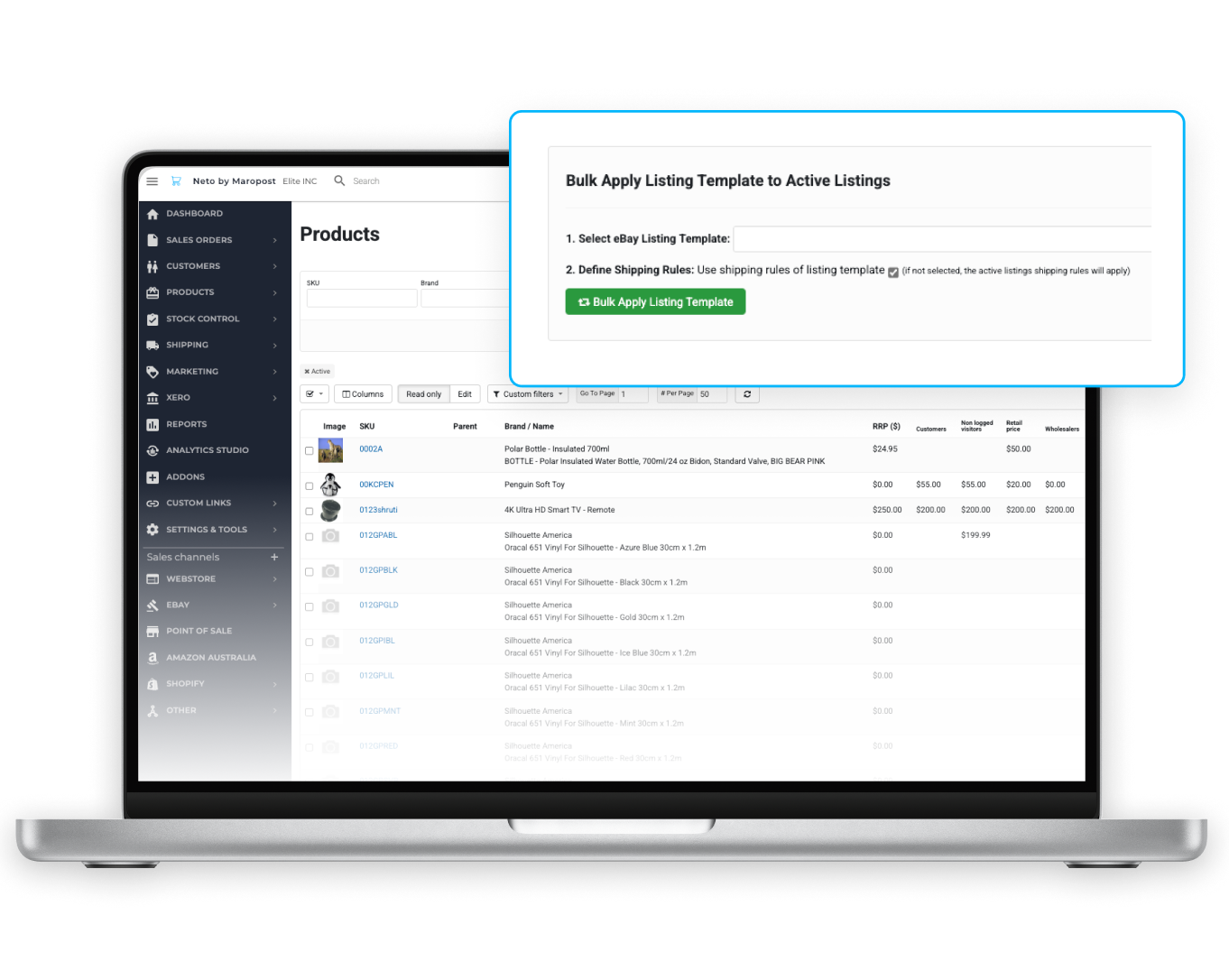
Neto Order Fulfillment Workflow with Shipping Label Generation

Enables B2B portals and marketplace selling out of the box

In contrast to Shopify, Neto includes dedicated B2B portals, customer-specific pricing, and account-based workflows as part of the platform. Plus, direct marketplace integrations provide centralised control over inventory and order routing without having to rely on third-party connectors.
Neto B2B Customer Portal Interface with Custom Pricing

Minimises vendor dependency
by centralising core workflows

In integration-heavy environments, responsibility for operational issues is often split across vendors, increasing resolution time and complexity. With Neto, more core workflows are handled within a single platform – reducing vendor dependency and image giving teams a clearer path to issue resolution.
Neto Analytics and Reporting Dashboard for Retail Insights Dashboard Reporting for Ecommerce Sales Performance Reporting Dashboard

Upgrade to a platform that matches
your operational reality today

If your business depends heavily on inventory accuracy, fulfilment precision, B2B workflows, and true multi-channel control, you need more than storefront flexibility – you need a platform built for operational depth. That’s exactly what Neto delivers.

Frequently asked questions

  • Is Shopify more expensive than Neto?

  • What makes Neto a better choice for Australian businesses?

  • Why should I switch from Shopify to Neto?